
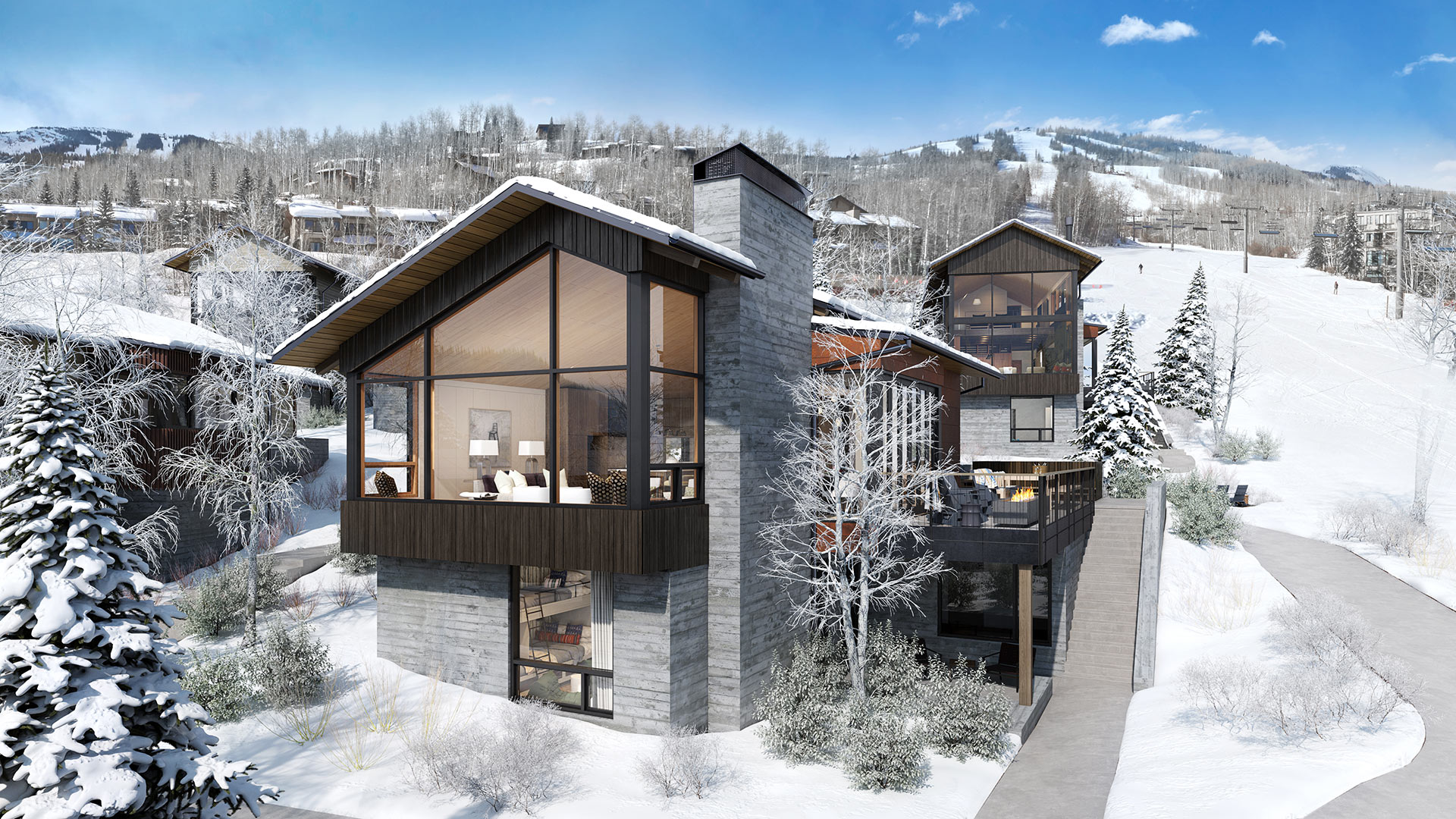
Every animation brief eventually arrives at the same question: how long should the film be? Teams that have never commissioned one tend to guess high: three minutes, five minutes, "long enough to show everything." The honest answer about architectural animation length is shorter than almost everyone expects: for most projects, 60 to 90 seconds is the sweet spot, and very few briefs justify more than two minutes.
That number is not arbitrary. It comes from how these films are actually watched, and from what they are for. Here is the reasoning, and a structure that makes every second earn its place.
Where the Film Is Watched Decides Its Length
An architectural animation lives in three places: a project website, a sales gallery loop, and a phone. Each punishes length differently.
On the website, the film autoplays near the top of the page. Analytics are unambiguous: attention decays fast, and the viewers who leave at forty seconds were often the most qualified ones, checking whether the project feels right. In the sales gallery, the film loops; a 90-second loop lands its emotional peak every minute and a half, while a five-minute epic guarantees most visitors walk in mid-story. On a phone, shared by a broker or cut for social, only the first fifteen seconds are promised at all.
Therefore, the question is not "how much can we show?" It is "what must be felt before attention runs out?"
The 90-Second Structure
The films that sell follow a shape close to this:
- The arrival (0–15s). One establishing move: down the entry drive, along the coastline, over the ridge. This is the hook, and it should contain the project's single best image.
- The heart (15–60s). Three or four spaces, held long enough to inhabit: the great room opening to the lanai, the pool terrace at dusk, the view from the primary suite. Movement stays slow. Cuts stay few.
- The signature (60–80s). The one moment unique to this project, like the wave breaking in the lagoon or snow falling past the fireplace glass. The frame people describe to someone else.
- The close (80–90s). Pull back to the whole, logo, silence.
Notice what is absent: the utility corridors, the second bathroom, the parking approach. An animation is not a documentation set. In fact, restraint is the luxury signal: the film that shows four spaces beautifully outsells the film that shows fourteen adequately.
Why Slower Reads as More Expensive
Camera speed is the most common flaw in animations from inexperienced studios. A camera that races through rooms reads as nervous, and nervousness reads as cheap. High-end film language moves the way its buyers move: unhurried, certain, pausing where the light is good. As a result, a slow 75-second film routinely feels richer than a fast three-minute one, and it costs less to produce.
Music follows the same rule. One piece, building once, resolving at the signature moment. However tempting, montage-style editing to a beat belongs to sneaker ads, not to architecture.
When Longer Is Justified
There are legitimate cases for more runtime. A master-planned community with distinct neighborhoods may need a two-to-three-minute film, effectively several short films joined by aerial connective tissue. An investor presentation sometimes wants a longer cut with captions and plan graphics. The right move is almost always to shoot for the 90-second hero film first, then assemble the long version from the same renders. Additionally, short vertical cuts for social should be planned from the start, not scavenged later.
Budget Follows Seconds, Loosely
Animation is quoted substantially by rendered seconds, so trimming a brief from three minutes to ninety seconds meaningfully reduces cost. But the bigger saving is focus: fewer, better shots concentrate the budget where buyers actually look. One extraordinary dusk sequence is worth four adequate daytime ones.
If a film is on your project's horizon, send the drawings and the sales calendar. We will storyboard the ninety seconds that matter, and show you exactly where every one of them goes.