
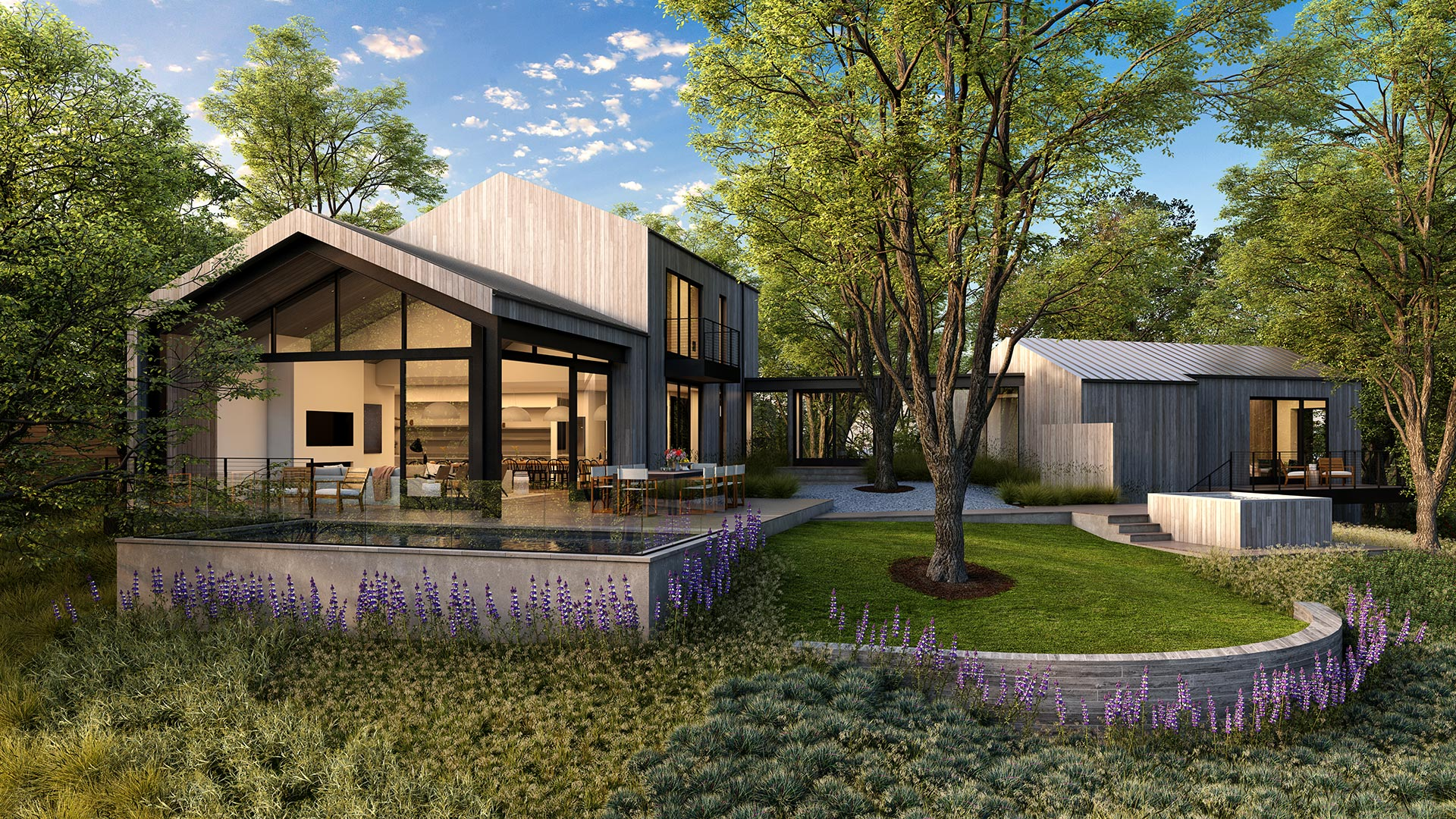
Ask three studios about architectural rendering cost and you will get three very different numbers. That is not evasion. It is because the price of a rendering has almost nothing to do with square footage and almost everything to do with what the image needs to accomplish.
Having rendered resort, club and residential projects at every scale, we can make the pricing logic plain. This guide explains what actually drives architectural rendering cost, what typical ranges look like, and how to budget so the imagery serves the project instead of straining it.
The Short Version
For a single photorealistic exterior still from a professional studio, most projects land somewhere between $1,500 and $5,000 per image. Interior stills tend to run similar or slightly less once a scene is built. Animation is quoted by the second or by the sequence, and a polished one- to two-minute film is often a five-figure line item. Virtual reality and interactive work is scoped per project.
However, those ranges are only useful if you understand why a specific image lands where it does. Four factors do most of the work.
What Actually Drives Architectural Rendering Cost
1. The state of your drawings
A rendering studio builds a 3D model before it makes a single image. Consequently, the completeness of your source material matters enormously. A clean CAD set with materials called out is fast to model. A napkin sketch is not; the studio is effectively finishing design decisions with you as it builds.
Neither is wrong. In fact, early-sketch visualization is some of the most valuable work we do, because it lets a client react before documentation begins. But it takes more hours, and the price reflects that.
2. Scene complexity and entourage
An empty house on a flat lot is one kind of scene. A clubhouse at dusk with landscaping, water, furniture, lighting design and people is another. Every element in the frame, from vegetation and vehicles to interior décor and ocean, is something an artist modeled, placed and lit. Therefore, richer scenes cost more, and the difference is visible in the final image.
3. The number of views from one model
Here is the most useful budgeting fact in this business: the model is the expensive part. Once a scene exists, additional camera angles are significantly cheaper than the first image. As a result, a package of five views is far better value than five separate one-off commissions. If you know a sales gallery or entitlement package is coming, scope the full set at once.
4. Deadline
Rendering is compute- and artist-hour intensive. A comfortable schedule lets a studio refine lighting and detail across several review rounds. A two-week miracle is sometimes possible, but rush work compresses revisions and usually carries a premium. Plan visualization at the same time you plan the marketing calendar, not after.
Typical Deliverables and How They Are Priced
- Exterior stills: priced per image, with multi-view discounts from a shared model
- Interior stills: per image; furniture and finish selections drive the hours
- Animation / fly-throughs: per second or per sequence; music, editing and pacing matter
- Virtual reality: per experience; priced on interactivity and level of detail
- Photo montage: per image; site photography and camera matching add a step
- Rendered site and floor plans: per sheet; excellent value for leasing and community sales
Where Budgets Go Wrong
The most common mistake is not overpaying; it is under-scoping. A developer commissions one hero image, the campaign works, and suddenly the team needs interiors, a film and a 360 tour on a compressed timeline. Each piece gets quoted as a rush, separately.
Instead, treat visualization as a program. Decide early what the entitlement package, the website, the sales gallery and the press kit each need. Commission the model once and harvest it repeatedly. For example, a project that scopes ten stills, a ninety-second film and three panoramas together will almost always spend less than one that buys the same assets in four emergencies.
Is Professional Rendering Worth It?
For projects selling before completion, the question answers itself: the rendering is the product until the building exists. Buyers commit seven and eight figures on the strength of imagery. Additionally, planning boards and design review committees respond to clear, honest visualization: a believable photo montage can carry a hearing.
In other words, architectural rendering cost is best understood as a marketing and communication expense, not a design expense. Measured against the value of one additional pre-sale, it is one of the smallest line items on the project.
How to Get an Accurate Quote
A studio can price your project quickly if you share three things:
- Drawings: whatever exists, from sketch to CAD, plus any material references
- Purpose: entitlement, pre-sales, design review, press
- Deadline: when the imagery must be in hand, and any hard dates behind it
With those in hand, expect a clear scope: deliverables, review rounds, timeline and a number. If a quote arrives without a conversation about purpose, be cautious: the image that wins a hearing and the image that sells a residence are lit, framed and staged differently.
Ready for a number on your own project? Send the drawings and the goal, and we will reply with a straightforward read on scope, timeline and cost.