
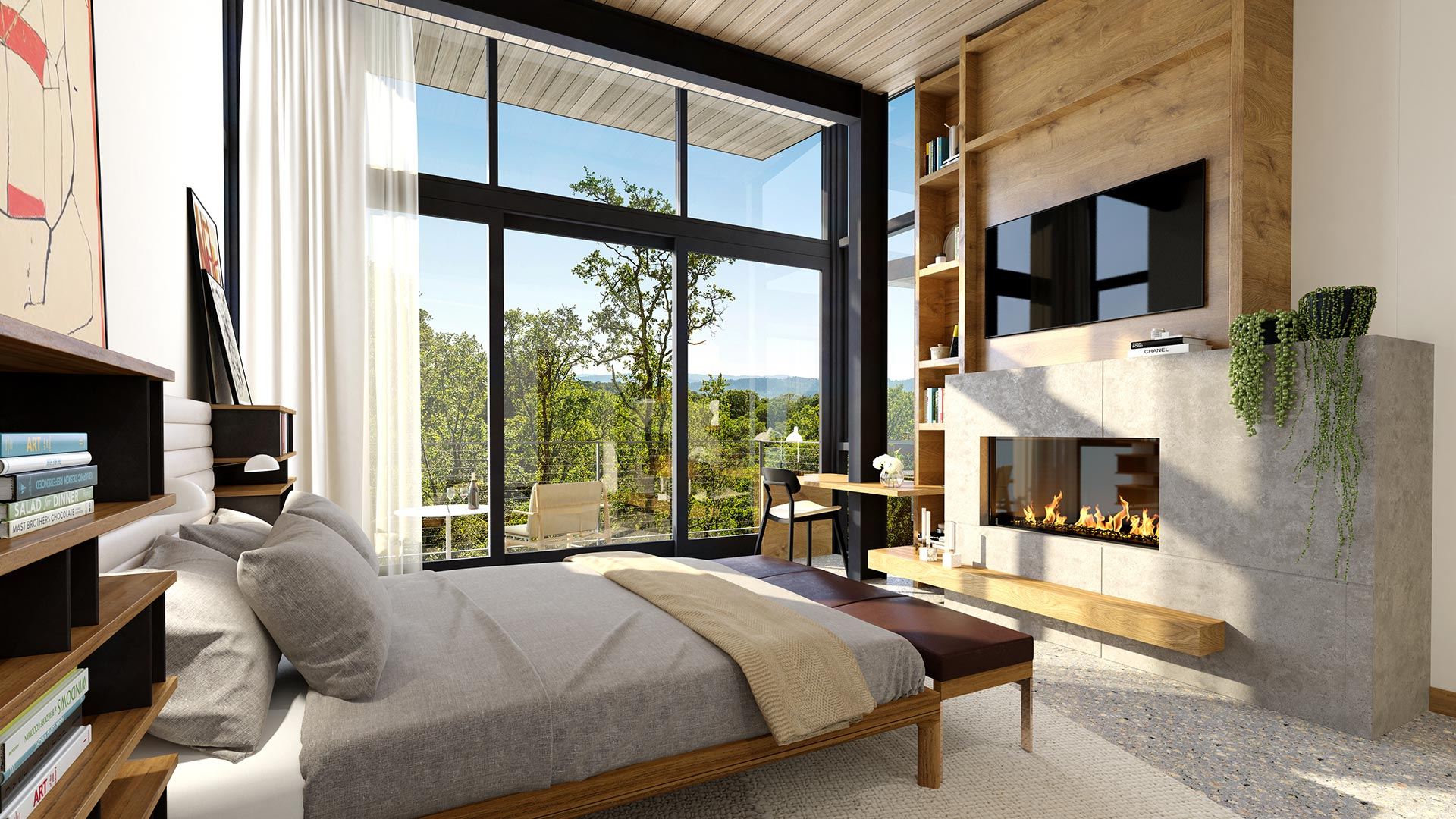
When a project faces a planning board, a community association or a design review committee, one image type carries more weight than any other: the photo montage rendering. It is the proposed building, composited into an actual photograph of the site: real light, real neighbors, real trees, and one new structure that does not exist yet.
Boards trust a montage for a simple reason. Everything in the frame except the proposal is verifiable. However, that trust is earned or lost in the craft, and a sloppy montage can sink a hearing faster than no image at all. Here is how the credible version gets made, and when your project needs one.
Why Montage Beats a Full Rendering in a Hearing
A fully rendered image is a persuasive sales tool, but it asks the viewer to accept an entire invented world. A skeptical commissioner knows the sky was chosen, the landscaping was art-directed and the camera was placed generously.
A photo montage removes almost every variable. The context is a photograph: the actual street, the actual ridge line, the actual afternoon light. Consequently, the conversation narrows to the only question that matters: how does the proposed building sit in this real place? That focus is exactly what a review process is designed to produce, and boards respond to imagery that respects it.
The Anatomy of a Credible Montage
The site photograph comes first
A montage begins on site, not in software. The photograph must be taken from a viewpoint that matters, whether the public right-of-way, a neighbor's sightline or the approach road, at a documented time of day. For contested projects, boards often specify the viewpoints themselves. Shooting several angles in one session is cheap insurance; re-shooting later in a different season is not.
Camera matching is the craft
The 3D model of the proposal must be photographed by a virtual camera that matches the real one exactly: position, height, lens, tilt. If the match is off by even a little, the building floats subtly wrong in the scene, and viewers feel it before they can explain it. In fact, most "bad montage" complaints trace back to careless camera matching rather than bad modeling.
Light and season must agree
The rendered building has to live under the photograph's sun. Shadow direction, softness, color temperature and even atmospheric haze are matched to the moment the photo was taken. Additionally, honest landscaping matters: plantings are shown at realistic installed sizes, not the mature canopy they might reach in twenty years.
Honesty Is a Strategy, Not a Constraint
It is tempting to soften a massing, widen a lens or pick a flattering viewpoint. Resist it. Review boards see hundreds of images, and they remember the studios and applicants who oversold. A montage that shows the project honestly, including its bulk from the unflattering angle, builds credibility that pays off across every subsequent submission.
In other words, the montage is not just an exhibit; it is a statement about how the project team operates. Teams that show the hard view and defend the design on its merits tend to get approvals, and they tend to get them faster.
When Your Project Needs One
Not every commission calls for montage work. As a rule, reach for it when:
- Entitlement or design review requires showing the project in context
- Neighbors and community groups need to see real sightline impacts
- A sensitive site, whether coastline, hillside or historic street, makes context the whole story
- Marketing wants authenticity: resort buyers respond to real places with the proposal seamlessly in them
For example, much of our wine-country and coastal work exists precisely because the setting is the argument: the building must be shown belonging to a real hillside, not an idealized one.
What to Have Ready
A montage moves quickly when three things exist: a site that can be photographed (or good recent photography with camera data), a reasonably resolved 3D model or drawing set, and clarity about which viewpoints the audience cares about. Therefore, involve the visualization studio before the hearing schedule is set; viewpoint photography, modeling and matching take real calendar time, and rushed montages read as rushed.
If your project is heading to a review board, send the drawings and the hearing date. We will tell you honestly which viewpoints matter, what the board will ask to see, and what it takes to have the image ready.