
A buyer cannot fall in love with a floor plan. That single fact explains why virtual tours for real estate have become the backbone of pre-construction marketing, and why the projects that sell fastest are usually the ones a buyer can walk through years before the building exists.
We have produced visualization for club communities, resorts and residences that sold out largely from a sales gallery. In every case, moving imagery did work that stills and plans could not. This article explains why, and how the three main formats (animation, 360 panorama and virtual reality) each earn their place.
The Imagination Gap
Pre-construction sales ask a buyer to commit an enormous sum to something they cannot visit. The drawings are accurate, but drawings speak architect. Most buyers do not. Between the plan set and the buyer's decision sits an imagination gap, and every unsold unit in a beautiful project usually fell into it.
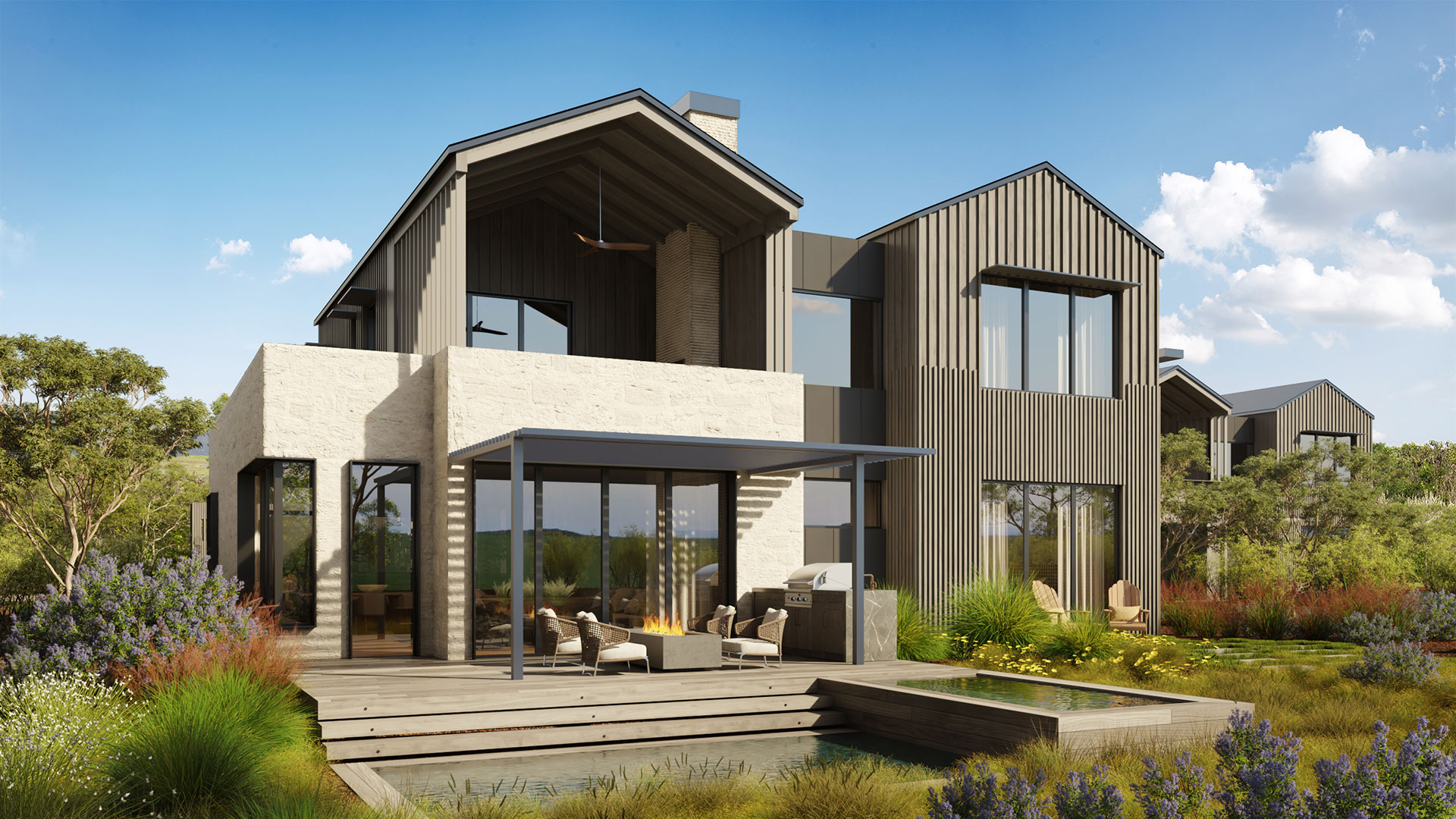
Still renderings narrow the gap. A photorealistic image gives the buyer one believable moment: dusk light on the clubhouse, the view from the lanai. However, a still is a single frame. The buyer must extrapolate the rest of the experience themselves.
Virtual tours close the gap almost completely. Motion supplies the one thing stills cannot: the feeling of moving through the place, down the entry drive, into the great room, out to the water.
Animation: The Emotional Workhorse
An architectural animation is a scripted film through the project. It is the most emotionally persuasive asset in the pre-sales kit, for a simple reason: pacing. A well-edited fly-through controls what the buyer sees and in what order, exactly like a model-home walk led by the best salesperson on the team.
Animation also travels farther than any other format. It anchors the project website, plays on loop in the sales gallery, opens investor presentations and cuts into social clips. As a result, the cost per impression of a ninety-second film is remarkably low, even though it is the largest single visualization line item.
360 Panorama: Control in the Buyer's Hands
A 360 panorama renders one point in the project in every direction, and the buyer steers. That control matters psychologically. For instance, a skeptical buyer who spins the camera and finds the view holds up in every direction starts trusting the rest of the imagery too.
Panoramas are also the most shareable format. They embed on a listing page, run on a tablet in a sales office and work on any phone. For projects where the site itself is the amenity (oceanfront, ski-in, golf course), a set of panoramas from key residences is often the best value in the whole program.
Virtual Reality: The Closer
Virtual reality places the buyer inside the unbuilt room with a headset. It is not a broadcast medium; it is a closing tool. In a sales gallery, VR turns an abstract commitment into a spatial memory: the buyer has, in a real sense, already stood in the home.
Therefore, VR earns its keep at the top of the market, where a single conversion pays for the entire program many times over. Teams selling eight-figure residences report the same pattern: the headset session is where hesitation ends.
Choosing the Right Mix
Most successful programs layer the formats rather than choosing one:
- Website and campaign launch: animation first; it is the asset everything else trails
- Listing pages and email: 360 panoramas for every key residence type
- Sales gallery: the film on loop, panoramas on tablets, VR for serious buyers
- Entitlement and press: stills and photo montage, cut from the same model
Notice that every format is harvested from one 3D model. In other words, the marginal cost of each additional format falls once the first is built. Scope the program together and the budget goes much further.
What This Means for Your Project
If your project sells before completion, virtual tours are not a garnish on the marketing plan; they are the product the buyer evaluates. The practical checklist is short:
- Commission the 3D model early, while design decisions are still settling
- Plan animation, panoramas and VR as one scoped program, not separate purchases
- Time delivery to the sales calendar: film for launch, VR for the gallery opening
Above all, insist on honesty in the imagery. A tour that oversells gets found out at completion; one that shows the real design, beautifully, builds the trust that carries a buyer to closing.
Planning a pre-construction campaign? Send the drawings and the sales timeline, and we will recommend the right mix of film, panorama and VR for the project.